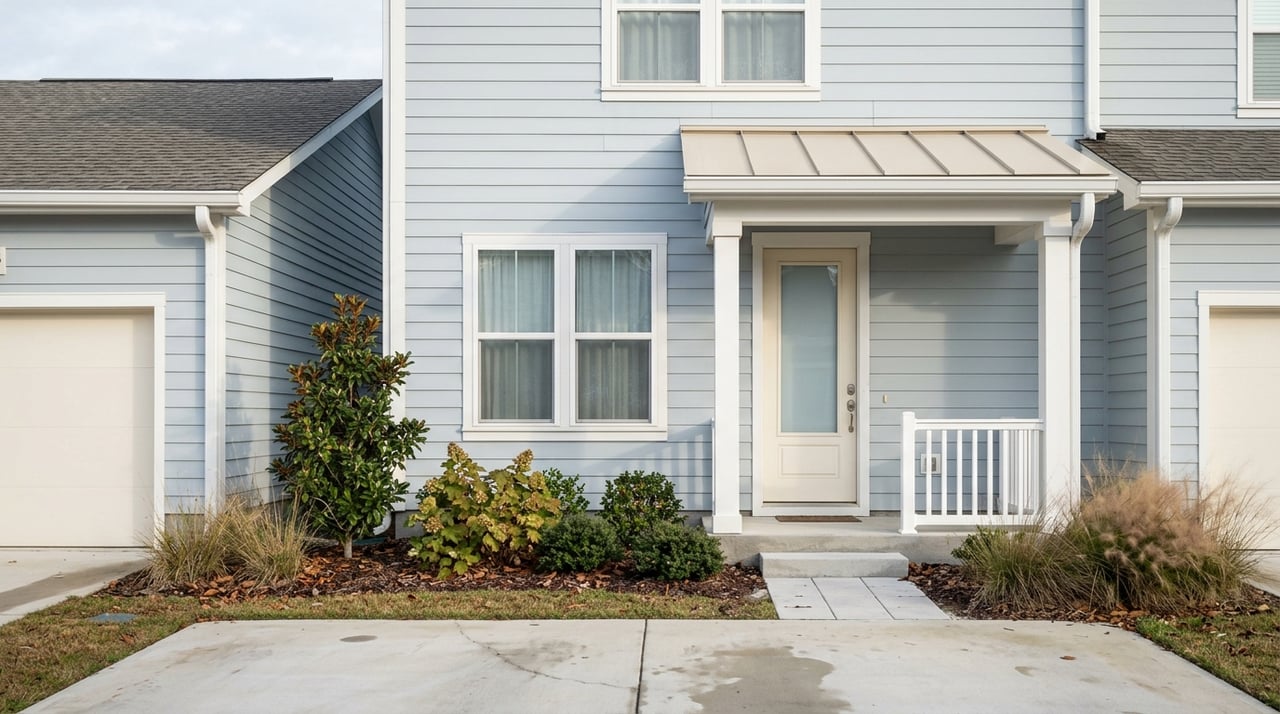
Townhome Versus Single-Family Living In Hampton
May 28, 2026
May 28, 2026
Trying to choose between a townhome and a single-family home in Hampton? It is a common question, and the answer is not always as simple as “more space” versus “less maintenance.” In a city with older established neighborhoods, redevelopment areas, and real flood considerations, the right fit depends on how you want to live and what monthly costs you want to manage. This guide will help you compare both options in practical Hampton terms so you can make a more confident move. Let’s dive in.
Hampton is a largely built-out coastal city, and that shapes what you will find on the market. According to the city’s 2025–2029 Consolidated Plan, single-family homes make up 64% of Hampton’s housing stock.
That means detached homes are still the dominant housing type in the city. At the same time, Hampton’s planning documents show that higher-density housing, including attached options, is being encouraged in downtown and key corridor areas.
For example, Downtown Hampton’s master plan supports more multifamily housing in the downtown core, while the Coliseum Central plan calls for rental and for-sale multifamily, attached single-family, and cluster-style single-family housing. In simple terms, if you are looking for a townhome-style setup, you are more likely to see it in redevelopment or mixed-use areas than in many older in-town neighborhoods.
Hampton’s neighborhood planning documents give a useful picture of where detached homes tend to be more common. Olde Hampton is described as mostly older single-family homes, Pasture Point is mostly single-family homes, Phoebus is mostly small single-family homes with some multifamily, and Sussex has been transitioning from original duplexes to single-family homes.
That does not mean you cannot find attached housing in Hampton. It means your home search may look different depending on the lifestyle you want. If you want a more traditional lot and detached setup, you will often see more choices across established neighborhoods. If you want attached living, you may find more options in areas planned for added density.
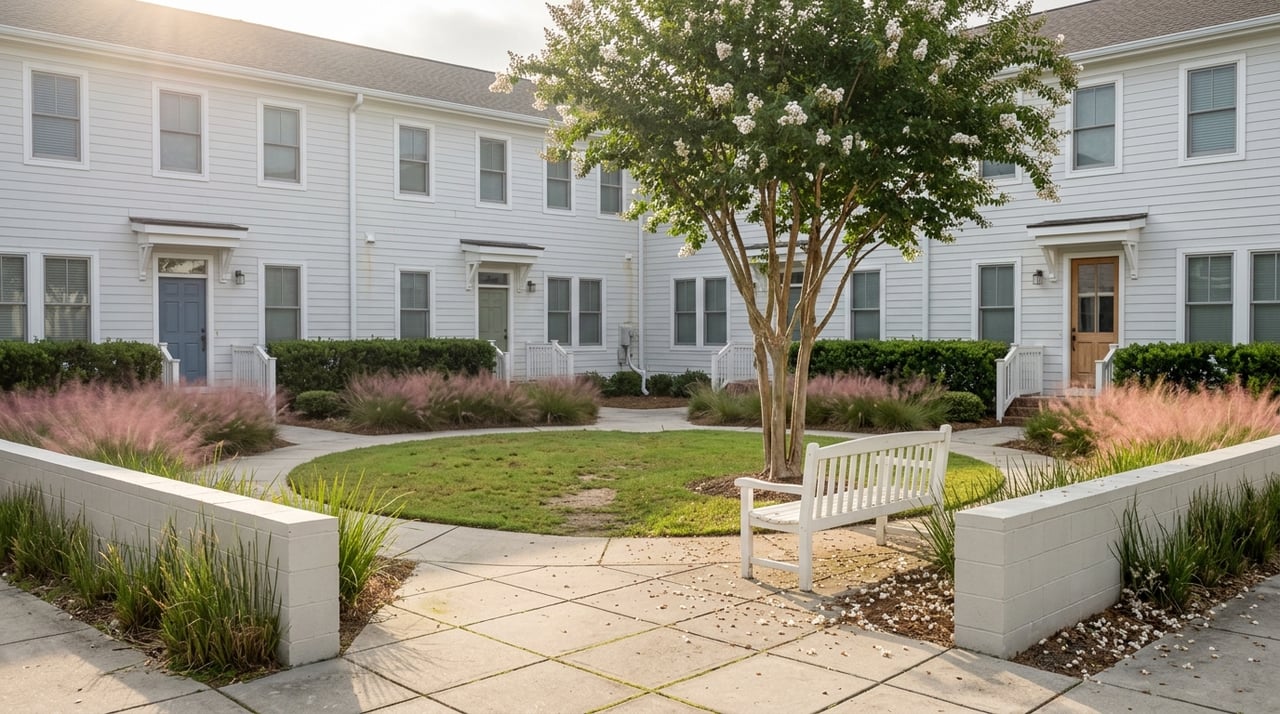
At the most basic level, a single-family detached home has open space on all four sides. A townhome, or other 1-unit attached home, is separated from neighboring homes by walls that run from ground to roof.
In Hampton planning documents, townhouses, rowhouses, and duplexes may be grouped under single-family attached housing. That is helpful because it reminds you that homes can look similar on the outside but work very differently when it comes to ownership and upkeep.
One of the biggest mistakes buyers make is assuming every attached home works the same way. In Virginia, not every attached home is a condo, and that legal distinction matters.
Two homes with nearly identical layouts can have different rules for maintenance, insurance responsibilities, and association obligations. That is why it is so important to review the deed and association documents, not just the photos and floor plan.
If you are considering a townhome in a common-interest community, Virginia law requires a resale certificate that includes key information such as:
Associations also must make annual budgets available and complete reserve studies at least every five years. They may also levy additional assessments for common-area upkeep and capital projects. For you as a buyer, the key question is simple: What exactly are your monthly dues covering, and what are you still responsible for on your own?
For many buyers, the biggest lifestyle difference comes down to maintenance. Detached homes usually give you more direct control over the lot, the exterior, and future improvements. They also place more of that upkeep directly on you.
That matters in Hampton, where the city’s consolidated plan notes that single-family homes can be expensive to maintain and that costs often rise as homes age. If you buy an older detached home, it is smart to plan for ongoing repairs and exterior work over time.
Townhomes often appeal to buyers who want less self-managed exterior work. That can make day-to-day ownership feel more predictable, but it usually comes with dues, rules, and shared decision-making through an association.
The monthly payment is where this decision becomes very real. Hampton’s median selected monthly owner cost with a mortgage is $1,656, according to U.S. Census data.
Property taxes are also part of the picture. Hampton’s real estate tax rate is $1.14 per $100 of assessed value, and assessments are based on 100% of market value. Using Zillow’s March 2026 median sale price of $264,600, property tax alone works out to about $3,016 per year, or roughly $251 per month, before exemptions or insurance.
That baseline helps, but your true monthly cost will depend on the type of home you choose.
With a townhome, some ownership costs may shift into HOA dues. Those dues are not just an added line item. They are part of the home’s real monthly cost.
Depending on the community, dues may help cover shared spaces, exterior elements, or future capital needs. Because Virginia associations must budget and maintain reserves, those dues often reflect real operating and long-term maintenance costs.
With a detached home, you may not have the same level of recurring association costs, or you may have none at all in some neighborhoods. But that does not mean ownership is cheaper month to month.
Instead, more of the repair and upkeep burden stays with you directly. Lawn care, exterior maintenance, roof planning, and aging-home repairs can become a larger part of your long-term budget.
In Hampton, flood risk deserves attention no matter which home type you choose. The city notes that Hampton experiences both rainfall and tidal flooding, and many areas are low-lying.
Homes in special flood hazard areas may require flood insurance, and the city also notes that most homeowners insurance policies do not cover flood damage. Flood insurance premiums can depend on whether the home is in a special flood hazard area and how the structure’s elevation compares with base flood elevation.
This is one reason broad rules like “townhomes cost less” or “single-family homes hold value better” can fall short in Hampton. Two homes with similar prices can have very different monthly ownership costs once flood exposure, insurance, and maintenance responsibilities are added in.
Local market activity also gives useful context. In Hampton’s February 2026 market report, single-family homes had 210 closed sales and 2.4 months of supply, while condos and townhomes together had 45 closed sales and 2.9 months of supply.
Because that attached-housing category combines condos and townhomes, it should be read carefully. Even so, the higher sales volume for single-family homes suggests a deeper current buyer pool for detached properties in Hampton.
That does not automatically make one option better than the other. It simply means single-family homes are the more common and more actively traded housing type in the local market right now.
A townhome may make more sense if your top priority is a more manageable ownership experience. That can be especially appealing if you are a first-time buyer, downsizer, or relocating to Hampton and want a simpler day-to-day routine.
A townhome may be the better fit if you want:
The tradeoff is that you will likely need to accept HOA dues, community rules, and shared governance on certain items.
A single-family home may be the stronger choice if control, privacy, and outdoor space matter most to you. In Hampton, detached homes also tend to offer the broadest range of neighborhood options because they make up such a large share of the housing stock.
A detached home may be the better fit if you want:
The tradeoff is that more maintenance and repair responsibility usually stays with you.
In Hampton, this decision is often less about which property type is universally better and more about which set of obligations feels more predictable for your life. A townhome often exchanges lower self-managed maintenance for dues and shared rules. A single-family home often exchanges more privacy and control for more owner-managed upkeep.
That tradeoff becomes even more important in a coastal city where flood exposure, redevelopment patterns, and housing mix can vary sharply by neighborhood. The smartest move is to compare homes in the specific area you want, not to rely on a one-size-fits-all rule.
Virginia requires a residential property disclosure statement that directs buyers to do their own due diligence on topics such as inspections, surveys, zoning, historic districts, flood status, and wastewater systems. In Hampton, that matters because conditions can change significantly from one neighborhood to the next.
If you are buying a townhome, review the HOA resale certificate, annual budget, reserve study, and any current or possible special assessments. If you are buying a detached home, pay close attention to age-related maintenance, lot conditions, and flood-zone details.
A careful review up front can save you from surprises later.
If you want help comparing townhomes and single-family homes in Hampton, Kristie Weaver can help you weigh the numbers, the lifestyle fit, and the neighborhood details so you can move forward with clarity.
Stay up to date on the latest real estate trends.

Get assistance in determining current property value, crafting a competitive offer, writing and negotiating a contract, and much more. Contact me today.