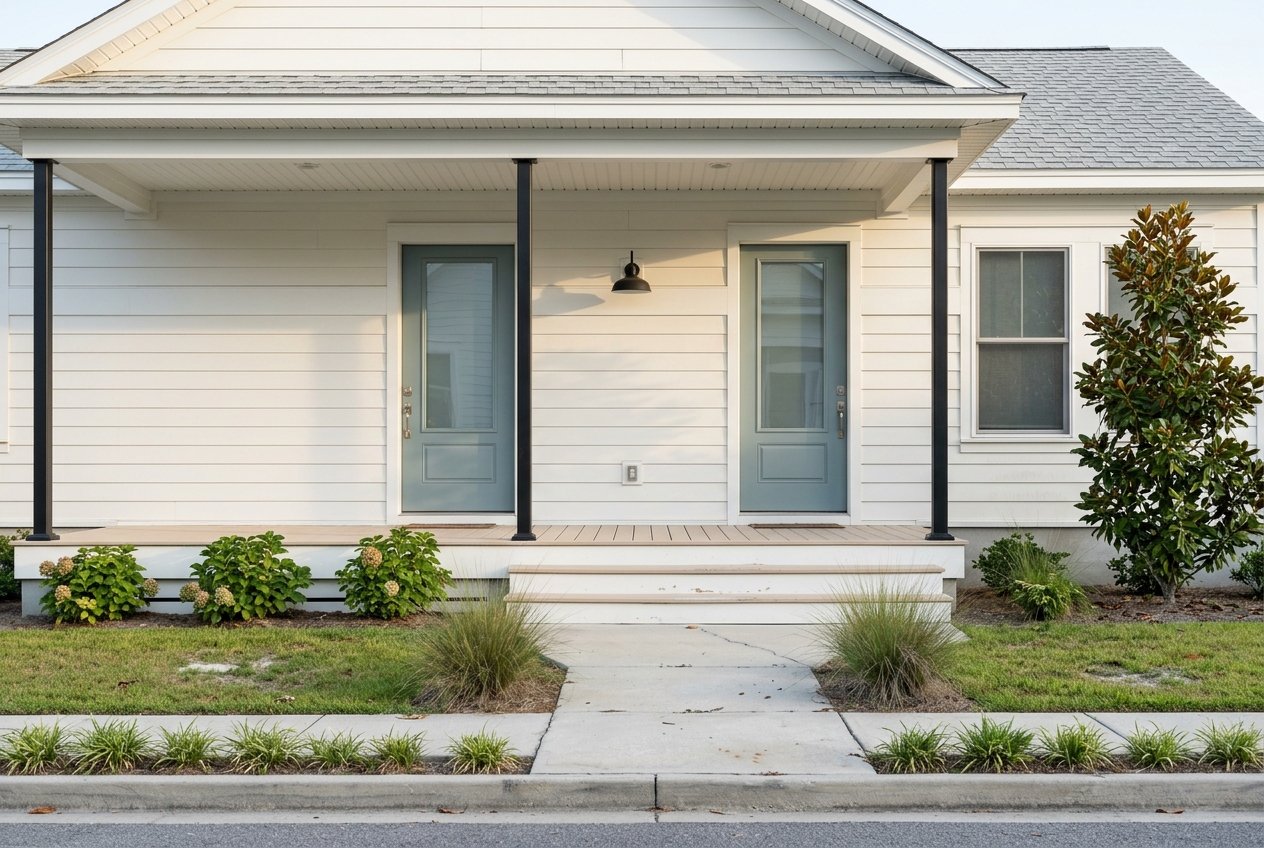
Getting Started With House Hacking In Portsmouth
June 18, 2026
June 18, 2026
Thinking about buying in Portsmouth but worried about the monthly payment? House hacking can be a practical way to get into a home while using rental income from part of the property to help with costs. If you want a smart, local-first overview, this guide will walk you through how house hacking works in Portsmouth, what rules matter most, and what to check before you buy. Let’s dive in.
House hacking usually means you buy a home, live in it as your primary residence, and rent out part of it. In Portsmouth, that often looks like a single-family home with a legal accessory dwelling unit or a small multi-unit property where you live in one unit and rent the others.
This approach can matter in a market where affordability is a real concern. In Portsmouth, the median gross rent is $1,266, the median value of owner-occupied homes is $229,400, median household income is $58,972, and the owner-occupied housing rate is 56.9%.
With 39,678 households and a poverty rate of 17.6%, even modest rental income may help some buyers make homeownership more manageable. That does not make every property a good fit, but it does explain why house hacking gets attention here.
For many buyers, the appeal is simple. You are not just buying a place to live. You are also buying a property that may offset part of your housing expense.
That can be especially useful if you are a first-time buyer, an eligible military or veteran buyer using VA financing, or someone who wants to build long-term flexibility into the purchase. The key is making sure the property, financing, and city rules all line up from the start.
Before you fall in love with a property, it helps to understand which loan paths may fit your plan. House hacking often works best when you choose financing based on the property type and your occupancy plan, not just the lowest advertised down payment.
FHA loans are a common starting point for buyers who want to keep upfront cash lower. FHA financing can be available for one- to four-family homes that will be your owner-occupied principal residence, and the down payment can be as low as 3.5% in many cases.
If you are looking at a duplex, triplex, or fourplex and plan to live in one unit, FHA may be worth discussing early with your lender. It can open the door to a house-hacking setup without requiring a large down payment.
In Hampton Roads, VA loans are a major option for eligible military and veteran buyers. VA says you can use a VA-backed purchase loan to buy a single-family home or a property with up to four units, as long as you meet occupancy, income, credit, and lender requirements.
VA also states that no down payment is required if the sales price does not exceed the appraised value. Condition matters too, because the property must meet VA minimum property requirements.
Conventional financing can also work, but the details can get more specific on multi-unit properties. Freddie Mac Home Possible is for owner-occupied primary residences, and for 2- to 4-unit fixed-rate loans and 2-unit ARMs, the maximum loan-to-value can be 95%.
For some 2- to 4-unit purchase transactions, Freddie Mac also requires at least one qualifying borrower to complete landlord education before the note date. That is a helpful reminder that house hacking is not only about buying a home. It is also about being ready to manage rental responsibilities.
Virginia Housing may also help qualified buyers with homebuyer education, loans, and down payment assistance grants. If you are trying to balance affordability with cash-to-close, this is a useful conversation to have early in your planning.
If you are buying a 2- to 4-unit primary residence, some loan programs may allow rental income from the other units to be considered in qualifying. Because this is program-specific, talk with your lender about it before you write offers.
This is where many buyers get tripped up. A floor plan that looks easy to rent does not automatically mean the use is legal.
Portsmouth zoning rules are central to any house-hacking plan. The city’s zoning ordinance governs permitted uses, setbacks, parking, building height, site plan review, and use permits, and most development requires zoning permit review before a building permit, business license, or certificate of occupancy is issued.
If you plan to convert a single-family home into a duplex or another multi-unit setup, Portsmouth requires permit applications for change of occupancy or use and for conversion of single-family residences to duplex or multi-family structures.
That means you should never assume a property can be reworked just because it has extra space or a separate entrance. A smart house-hack purchase starts with what the city allows now, not what you hope will be easy later.
Accessory dwelling units, often called ADUs, are allowed in Portsmouth only under current city standards. They are allowed only on lots with single-family detached dwellings, not on lots with multi-family, townhouse, two-family, or three-to-four-family dwellings.
Only one ADU is allowed per lot. The ADU must be at least 300 square feet, cannot exceed 25% of the floor area of the principal structure, requires 1 to 2 off-street parking spaces, and cannot be sold separately from the main house.
These details matter because they can quickly change whether a property fits your plan. If you want to rent a secondary space, parking and size limits are not small issues.
Some properties come with extra layers of review. In Portsmouth, permit exemptions do not apply in regulated flood hazard zones or historic districts.
The city also requires a certificate of appropriateness before most exterior work visible from the public right-of-way in the Downtown Design or Historic Districts. If your house-hacking strategy depends on adding an entrance, changing the exterior, or building an addition, those extra approvals can affect your timeline and budget.
If you plan to rent part of the property, verify whether the address is in a Portsmouth rental inspection district before closing. In those districts, owners of rental dwelling units must notify the department in writing within 60 days when the property is used for residential rental purposes.
The city then issues a certificate of compliance after inspection, and the posted fee is $50. This is one of those local details that is easy to miss but important to understand before you become a landlord.
In Portsmouth, the easiest house-hack properties are often the ones that already fit the intended use with minimal conversion work. That can lower risk, reduce permit surprises, and make financing smoother.
A strong candidate may have:
These features matter because Portsmouth’s rules around parking, permits, and occupancy changes can make complicated remodels harder than they first appear.
Once you rent part of the property, you are not just a homeowner. You are also a landlord, and Virginia law sets clear responsibilities.
Landlords must comply with applicable building and housing codes that affect health and safety. They must make repairs needed to keep the premises fit and habitable, maintain shared common areas in a clean and structurally safe condition, keep electrical, plumbing, heating, ventilation, and air-conditioning systems in good working order, and prevent moisture and mold issues.
This is especially important in house hacking because you may live very close to your tenant. A property that is easier to maintain can make the experience much more manageable.
Virginia law also requires landlords to provide an itemized written notice of the security deposit disposition, along with any amount due to the tenant, within 45 days after the tenancy ends or the tenant vacates, whichever happens last.
That is a basic part of staying organized and compliant as a landlord.
Fair housing rules still apply when you rent out part of a home. The Fair Housing Act prohibits discrimination because of race, color, national origin, religion, sex, familial status, or disability.
A good best practice is to use consistent screening criteria for every applicant. Consistency helps reduce risk and keeps your process fair.
The best house-hack deals in Portsmouth are usually not the most complicated ones. They are often the properties that already fit city rules, align with the loan program, and do not depend on major changes after closing.
That is why a local strategy matters. You want to review financing, zoning, permits, parking, flood concerns, historic rules, and rental inspection requirements before you commit.
If you are considering house hacking in Portsmouth, working with someone who understands Hampton Roads market conditions and can help you think through the details can save you time and stress. When you are ready to map out your options, connect with Kristie Weaver.
Stay up to date on the latest real estate trends.


Get assistance in determining current property value, crafting a competitive offer, writing and negotiating a contract, and much more. Contact me today.