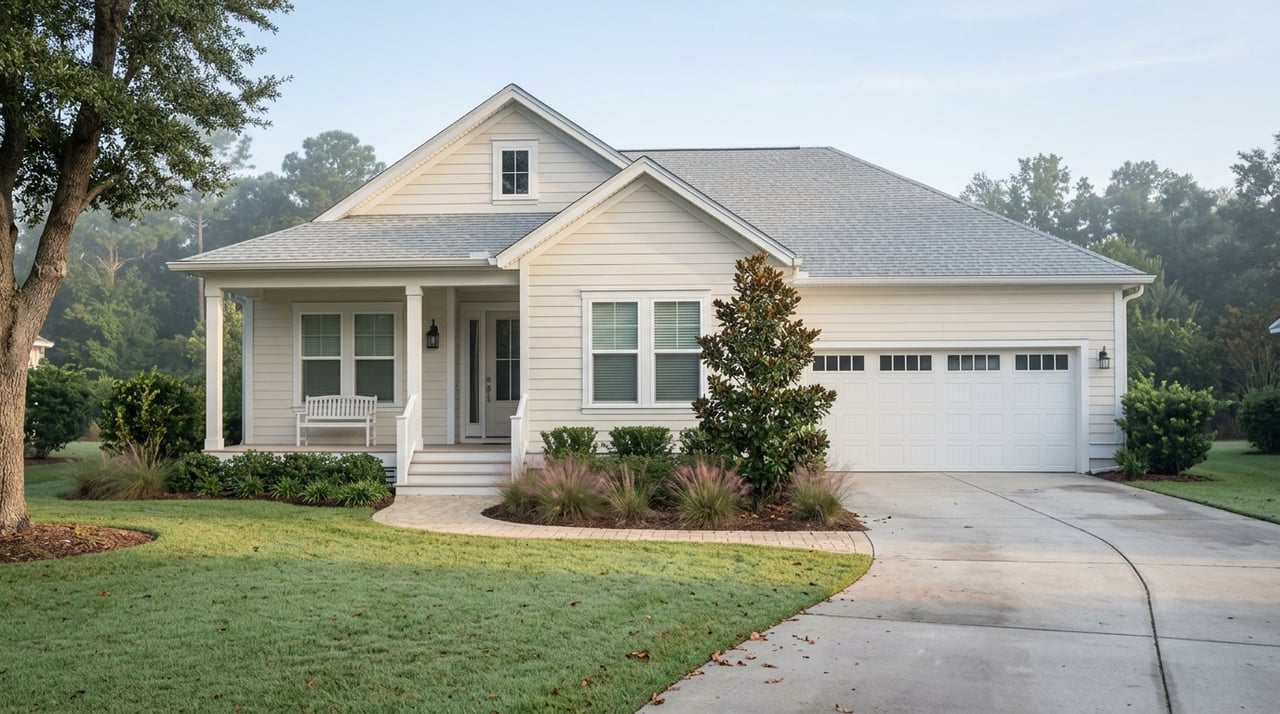
Balancing Space And Commute When Buying In Suffolk
June 4, 2026
June 4, 2026
Wondering if you can get more house and more yard in Suffolk without creating a commute you regret? That is one of the most common questions buyers face here, and for good reason. Suffolk offers everything from convenience-focused areas near major routes and daily services to rural settings with larger lots and more privacy. If you are trying to balance space and drive time, this guide will help you think through the tradeoffs and narrow your search with confidence. Let’s dive in.
Suffolk is not a small, compact city. The city describes itself as the largest city in Virginia, and Census QuickFacts lists about 399.16 square miles of land area with an estimated 103,105 residents in 2024. That size shapes almost every home search here.
The city’s planning documents also show a clear split in how Suffolk grows. There are compact growth areas around the central core and the northeast, lower-intensity development between them, and a more preserved rural southern half. In practical terms, that means you may be choosing between easier access to roads and services or more land and a quieter setting.
That tradeoff matters because commute time in Suffolk is already meaningful. Census QuickFacts lists a mean travel time to work of 30.2 minutes, which is slightly above Virginia’s 27.3-minute average. If you move farther out for more space, that daily drive can add up quickly.
For many buyers, more space means a larger lot, more privacy, and a little breathing room between homes. In Suffolk, that often points you toward rural neighborhoods and village areas where development is lower density and homes may sit on larger parcels. That can be especially appealing if you want outdoor space, fewer nearby neighbors, or room for hobbies and storage.
Suffolk’s 2045 land-use framework describes rural neighborhoods as large-lot, low-density areas where travel is automobile-oriented. The same document notes that many properties in those areas rely on private wells and septic systems. So when you picture extra land, it helps to also picture the maintenance, utility setup, and driving patterns that may come with it.
More space can absolutely be worth it. You just want to make sure you are comparing the full lifestyle, not only the lot size on paper.
A better commute does not always mean the shortest possible drive. For many buyers, it means a route that feels manageable day after day and keeps errands, work, and appointments more convenient. In Suffolk, that usually starts with access to the city’s major road corridors and practical service areas.
The city’s comprehensive planning materials identify I-664 and portions of Route 58 as carrying the highest daily traffic volumes in Suffolk. Other important routes include 460, 32, 13, 17, 337, and 627. Major regional access points also include I-664, I-64, Route 460, and the Route 58/460/13 Bowers Hill interchange.
That road network is one reason many convenience-oriented buyers begin their search in northern and northeastern Suffolk. Areas around Downtown Suffolk, Chesapeake Square, Harbour View, and the corridor that connects them generally offer easier access to highways, stores, and everyday services. If your week is packed with commuting, appointments, and errands, that convenience can have real value.
If your top goal is to keep your drive practical, northern and northeastern Suffolk are often a smart starting point. Based on the city’s growth map, road network, and transit layout, these areas tend to line up best for buyers who want more immediate access to groceries, medical services, retail, and regional highways. They can also make it easier to move around the region without adding as much cross-city driving.
Downtown Suffolk can also appeal to buyers who want to stay closer to the city’s core. Suffolk Transit provides fixed-route service in the downtown area and Northern Suffolk, plus a connection from downtown to HRT in the Chesapeake Square area and onward to the North Suffolk Library. That does not make Suffolk a transit-heavy market overall, but it does matter if you want more options for getting around.
Transit routes also reach places many buyers use in everyday life, including Obici Hospital, Food Lion, Walmart, Lakeview Medical Center, the Pruden Center, Harbour View, and retail areas near North Suffolk Library. If routine convenience matters as much as square footage, these locations deserve a closer look.
If you are drawn to land, privacy, and a more rural feel, Suffolk has options that can be very appealing. The city identifies Holland, Whaleyville, and Chuckatuck/Oakland as rural villages or rural growth areas. These parts of Suffolk are often a better fit for buyers who want larger lots and a countryside setting.
The tradeoff is that these areas usually involve a stronger day-to-day dependence on driving. That can affect not only your work commute, but also school drop-off, sports practice, grocery runs, and medical appointments. A property may look like a great value on paper, but the true fit depends on how often you are willing to make those drives.
This is where strategy matters. If you love the idea of more land, it helps to identify what you are truly gaining and what you are willing to give up.
When buyers are torn, I recommend looking at the decision through your weekly routine instead of just the listing photos. A bigger yard can feel exciting right away, but your daily drive is the part you experience over and over. The right home is usually the one that supports your real life, not just your ideal life.
Here are a few questions worth asking yourself:
Once you answer those questions, your search gets much clearer. Instead of trying to see everything in Suffolk, you can focus on the locations that actually match your routine.
One of the smartest things you can do in Suffolk is test a property’s location at the actual times you expect to travel. The city’s transit and route information makes it clear that a simple map radius does not tell the full story. Traffic flow, route choice, and the time of day can change how a commute feels.
This matters even more if a home depends on a specific arterial or interchange. Suffolk currently has active Route 58 corridor work and Route 58 interchange and access studies. Before you make an offer, it is wise to re-check how the drive works in real conditions.
A home that feels manageable on a Sunday afternoon may feel very different on a weekday morning. That kind of testing can save you from a frustrating surprise after closing.
If you are shopping for more land, do your homework early on utilities and site conditions. In Suffolk’s rural neighborhoods, private wells and septic systems are common. That is not automatically a problem, but it does mean you should confirm the utility type and understand your maintenance responsibilities.
You will also want to look into any land-use or environmental constraints that could affect how you use the property. For water-adjacent or woodland-heavy parcels, the city maintains Chesapeake Bay Preservation Area and Resource Protection Area rules. Floodplain, wetlands, or Bay-preservation overlays can affect the parcel in ways that matter to your plans.
These details are especially important if you are choosing rural space because of what you hope to do with it. It is always better to verify those facts before you fall in love with the lot.
If you are relocating to Hampton Roads or planning around a military commute, Suffolk needs an extra layer of planning. Naval Station Norfolk is in Sewell’s Point in Norfolk, and its location alone can shape your search if you need to get there regularly. In many cases, it makes sense to prioritize Suffolk locations that reduce cross-city driving before you add extra acreage farther out.
That does not mean a rural Suffolk property is off the table. It just means your home search should begin with your real commute pattern, especially if you are moving from outside the area and do not yet have a feel for regional traffic. A strategic search can help you avoid choosing more land at the cost of too much lost time.
If school assignment matters to your move, verify attendance boundaries early in the process. Suffolk’s planning materials specifically include an Attendance Report, Facilities Report, and Student Yield Analysis Report as part of broader growth and service planning. That is a good reminder that attendance patterns are part of the local planning picture.
Boundaries and assignments are not something to assume based on a neighborhood name or online map pin. If that detail matters for your household, confirm it before you make a decision.
There is no universal right answer to the space-versus-commute question in Suffolk. Some buyers are happiest with easier access to highways, stores, and medical services. Others are willing to drive farther for more land, more privacy, and a rural setting.
The key is being honest about your non-negotiables. If you start with your schedule, your comfort with driving, and the kind of property setup you want, Suffolk becomes much easier to navigate. And when you match those priorities to the right part of the city, you are far more likely to feel good about your home long after move-in day.
If you want help weighing Suffolk neighborhoods, commute patterns, and property tradeoffs, Kristie Weaver can help you build a smart, local strategy that fits how you actually live.
Stay up to date on the latest real estate trends.

Get assistance in determining current property value, crafting a competitive offer, writing and negotiating a contract, and much more. Contact me today.