Getting Started With Single-Family Rentals in Portsmouth
April 2, 2026
April 2, 2026
If you are thinking about buying your first single-family rental in Portsmouth, you are probably asking the right questions already: What will rent well, what will cost more to operate, and where can a deal make sense? Portsmouth can offer an accessible entry point for investors, but it is also a market where neighborhood differences, flood considerations, and city requirements matter more than the headline numbers. In this guide, you’ll get a practical overview of how to evaluate single-family rentals in Portsmouth so you can move forward with a clearer plan. Let’s dive in.
Portsmouth gives you a mix of relatively approachable home prices and steady rental demand. As of February and March 2026, Redfin reported a median sale price of $285,000 and 39 days on market, while Realtor.com reported a median listing price of $275,930, about 279 homes for sale, and described the city as a buyer’s market.
That matters if you are trying to buy with room for negotiation and still target workable rent. On the rental side, trackers from Zillow, Zumper, and Realtor.com place typical rent around the $1,500 to $1,600 range, with Realtor.com showing about 124 rentals listed, according to the research report. For many first-time investors, that creates a starting point worth exploring.
Portsmouth is also a sizable Hampton Roads city with about 96,482 residents, 43,321 housing units, and a 56.9% owner-occupied housing unit rate, based on U.S. Census QuickFacts for Portsmouth. Still, the Census median gross rent of $1,266 is older data, so you should rely more heavily on current neighborhood comps when estimating income.
One of the biggest mistakes new investors make is using a citywide rent average as their main underwriting tool. In Portsmouth, that shortcut can lead you off track because rent levels vary meaningfully by neighborhood and ZIP code.
According to Realtor.com local market data for Portsmouth, neighborhood median rents are around $1,225 in Cradock, $1,287 downtown, $1,650 in Olde Towne, and $1,700 in Park View. ZIP code medians also show a spread, ranging from about $1,450 in 23704 to $1,780 in 23701 and $1,747 in 23703.
That tells you something important: Portsmouth is not one rental market. It is a collection of smaller submarkets. If you are comparing two houses with similar bedroom counts but different locations, the rent potential and operating profile may be very different.
Current house-for-rent examples support the same idea. Realtor.com listings suggest 2-bedroom homes are often around $1,425 to $1,550, while 3-bedroom homes commonly fall around $1,495 to $1,550. For a first-time investor, that means many Portsmouth single-family rentals compete in a modest, practical price band rather than a luxury tier.
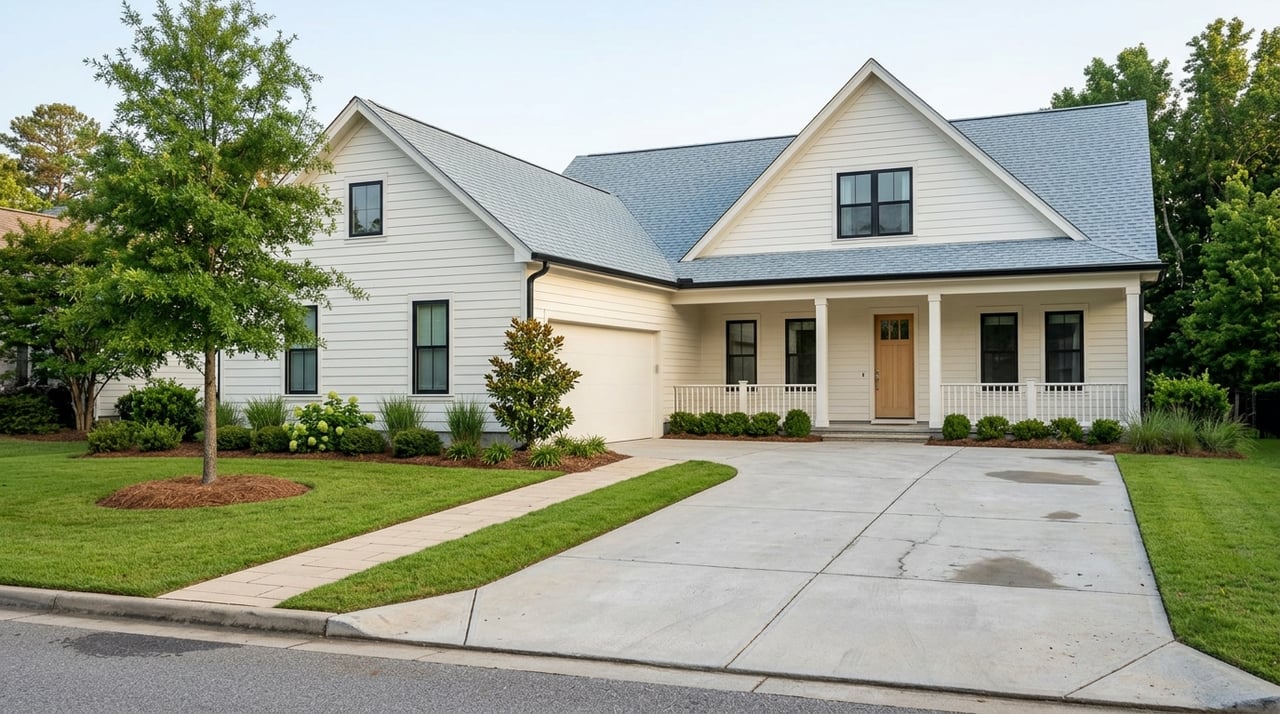
If your goal is a more traditional single-family rental, Portsmouth offers several neighborhood patterns worth understanding. The city’s housing plan describes Green Acres as emblematic of single-family dominant typologies within Churchland, while Park Manor is characterized by ranches and cape cod homes on suburban-style streets and is described as less prone to flood risk than some urban-core neighborhoods.
Other areas can still be attractive, but they may come with more complexity. The city describes Cradock as an aging pre-war neighborhood where housing stock may need renovation to stay competitive. Port Norfolk includes larger historic homes, wrap-around porches, and conversion homes, while Park View has a broader mix of small apartment complexes, townhomes, and duplexes, according to the Portsmouth Citywide Housing Plan.
As you narrow your search, ask yourself a few practical questions:
Those answers will shape which properties make sense for you.
Before you get too far into a deal, verify that the property fits your intended use. Portsmouth zoning supports single-family rentals in several districts, but the district still matters.
The city states that the Neighborhood Residential district is intended for single-family detached dwellings at low densities. The General Residential district primarily accommodates single-family detached, attached, and two-to-four-family dwellings at moderate densities, while Urban Residential and Multi-Family Urban Residential allow broader residential patterns, according to the City of Portsmouth zoning districts guide.
For many buyers, the takeaway is simple: do not assume all residential properties work the same way. If you are buying with plans for rehab, additions, infill, or redevelopment, zoning should be one of your earliest checks.
Some Portsmouth homes offer a lot of architectural character, but character can come with added review requirements. Portsmouth has five locally designated historic districts: Truxtun, Cradock, Olde Towne, Park View, and Port Norfolk.
In those districts, the city says that new development, rehabilitation, or redevelopment requires a Certificate of Appropriateness before other applications can be filed. The city also notes pre-approved single-family plans for Cradock and Truxtun, which may help with certain infill or rebuild situations. You can review those details on the city’s Historic Districts page.
If you are looking at an older home and planning updates, this is a key step. Approval timing can affect your renovation schedule, carrying costs, and lease-up timeline.
A property that looks affordable on paper can feel very different once you include local operating costs. Portsmouth has a few items that first-time investors should verify early.
First, the city administers a rental inspection program for rental dwellings located in rental inspection districts. Owners must notify the city within 60 days when a residence is used for rental purposes, approved inspections lead to a Certificate of Compliance, and the posted inspection fee is $50.
Second, Portsmouth’s Property Maintenance and Code Enforcement office enforces the Virginia Property Maintenance Code and related city ordinances. That is especially important if you are buying an older house, because routine repairs and code-compliance work should be part of your reserves from day one.
Third, real estate taxes are billed quarterly, and the stormwater utility fee is included on real estate tax statements. These are not glamorous line items, but they affect your monthly cash flow just as much as a repair bill does.
In Portsmouth, flood risk is not a side note. It is a core part of due diligence.
The city explains in its flood information pamphlet that severe storms make Portsmouth highly susceptible to coastal flooding because of its location beside the Elizabeth and James Rivers, flat topography, and low land elevations. The city also notes that AE and VE are high-risk flood zones, approvals are required for construction and development in Special Flood Hazard Areas, and flood insurance is required for structures in AE or VE with a federally backed mortgage.
Portsmouth participates in the National Flood Insurance Program Community Rating System, which the city says can produce a 5% discount for eligible flood policies. Even with that possible discount, insurance costs can still change your numbers quickly. Before you buy, confirm the property’s flood zone, estimated insurance cost, and any improvement limitations that could affect future plans.
Older detached homes can create opportunity, but they also require clear planning. In Portsmouth, that means looking past cosmetic updates and thinking about systems, compliance, flood issues, and permitting.
If you are considering a rehab, the city’s free Planning Assistance Program can help you navigate zoning, planning, flood protection, special exceptions, rezoning, subdivision, and related reviews before an application is submitted. For investors who want fewer surprises, that is a useful resource to bring into the process early.
A smart first-pass rehab review should include:
In Portsmouth, your renovation plan can be just as important as your purchase price.
Based on current listing patterns, modestly priced, practical homes appear to define much of Portsmouth’s single-family rental market. Many active listings cluster around 2- and 3-bedroom homes rather than high-end luxury inventory.
That does not mean every house will perform the same. It means tenant appeal is often tied to value, functionality, and location-specific tradeoffs. A well-kept ranch in an area with more traditional single-family patterns may compete differently than a historic detached home that offers charm but higher upkeep.
In broad terms, Portsmouth tenant appeal seems to come from a mix of:
The city’s housing plan and operating guidance suggest that many homes need owners to balance charm with practical upkeep. If you underwrite only for rent and mortgage, you may miss the bigger picture.
If you are getting started with single-family rentals in Portsmouth, keep your evaluation process simple and disciplined. The strongest deals are often the ones where the purchase, rent, condition, and operating realities all line up.
Use this framework as you review properties:
If you do those six things well, you will be ahead of many first-time buyers in this market.
Portsmouth can be a smart place to start if you want a single-family rental in Hampton Roads, but success here usually comes from local detail, not broad averages. The right property for you will depend on neighborhood rent patterns, property condition, flood exposure, and how much complexity you are prepared to manage.
If you want help evaluating detached rental opportunities in Portsmouth and the broader Hampton Roads market, connect with Kristie Weaver. You’ll get strategic guidance, local insight, and hands-on support as you weigh your options and move with confidence.
Stay up to date on the latest real estate trends.
Get assistance in determining current property value, crafting a competitive offer, writing and negotiating a contract, and much more. Contact me today.