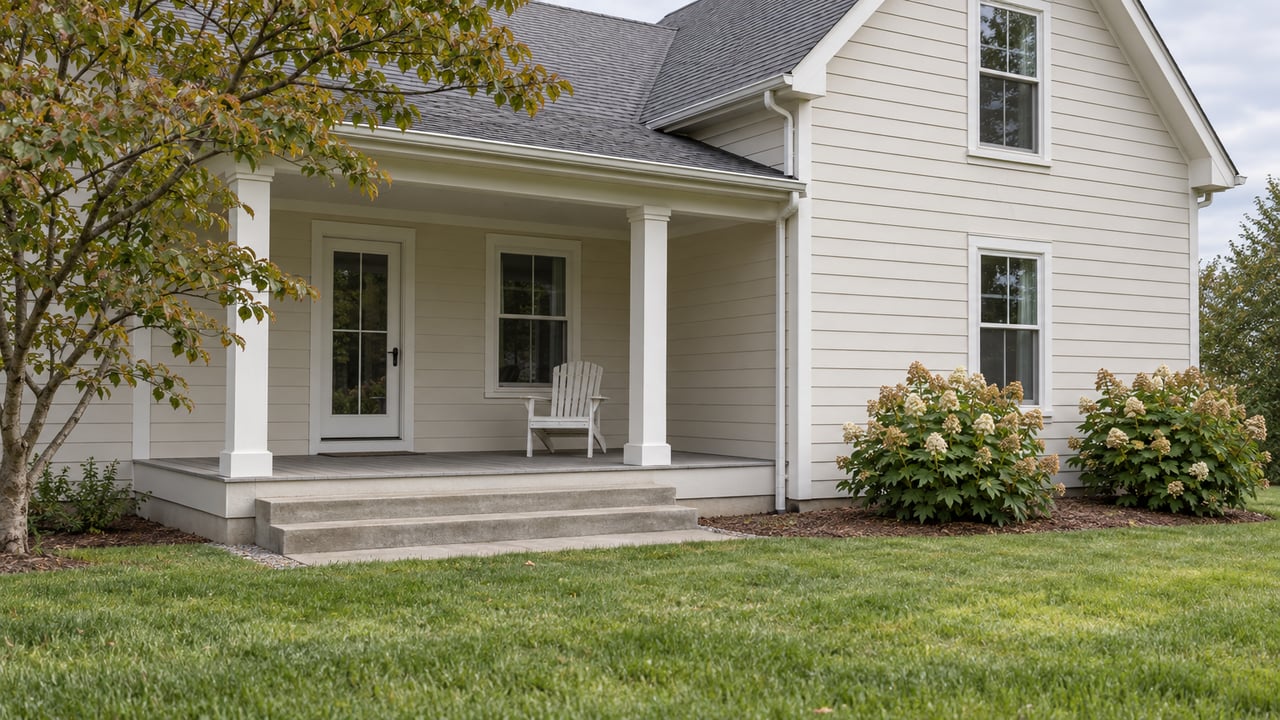
Suffolk's Backyard Apartments Still Can't Be Rented, and the New State Law Didn't Change That
October 15, 2026
October 15, 2026
"The accessory dwelling unit shall not be offered for rental purposes."
That's the current wording of Section 31-701(b)(13)(F) of Suffolk's Unified Development Ordinance, as published in the city's code on Municode. On September 16, 2026, City Council voted 6-0 against the amendment that would have replaced it. So the rule stands. It also stays in place after Virginia's new accessory dwelling unit law takes effect next July, because of an exemption in that law. As a result, the garage apartment, in-law suite or backyard cottage on a Suffolk listing is governed by local rules that are stricter than most buyers expect.
For anyone comparing homes in Suffolk with homes in neighboring cities, this changes how much a second unit is worth. In Suffolk, a finished ADU adds living space under rules written for family use and personal use, not for rental income.
The confusion comes from three versions of the ADU rules that were all in circulation in 2026. Only one of them applies in Suffolk today.
| Suffolk code in force now | Suffolk amendment OTA2026-005, denied | Virginia SB531, effective July 1, 2027 | |
|---|---|---|---|
| Renting the ADU | Not allowed | Allowed for terms of 30 consecutive days or longer | Localities may require leases of 30+ days |
| Detached units | Conditional use permit in most residential districts | By right in most residential districts | Permitted accessory use in single-family districts |
| Extra parking | One additional off-street space | None beyond the main home's minimum | Localities may require dedicated parking |
| Size | 50% of the main home if it's 2,000 sq ft or less; 1,000 sq ft cap above that | Same cap, plus two bedrooms max and lot coverage limits | Local limits can't go below 350 or 500 sq ft depending on lot size |
| Permits and oversight | Annual zoning compliance review | Annual review removed; certificate of occupancy required | ADU permit required, fee capped at $500 |
The current code also limits each lot to one ADU and caps occupancy at one person per 200 square feet of the unit's floor area. The ADU has to connect to the main home's water and sewer or septic system. A separate system is allowed only when the lot is at least four acres and the detached unit sits at least 100 feet from the house. On a lot of under one acre in the Agricultural, Rural Residential or Rural Estate districts, a detached ADU also needs a conditional use permit.
The text of SB531, as enrolled in the Virginia Legislative Information System, was signed April 13, 2026 and takes effect July 1, 2027. It treats ADUs as a permitted accessory use in single-family residential zoning. It allows localities to require leases of at least 30 days, but it doesn't let them ban rentals altogether. It also bars localities from requiring that the people living in the ADU and the main house be related.
Near the end, the bill adds a short clause: "Nothing in this section shall apply to a locality that adopted an ADU ordinance prior to January 1, 2026."
Suffolk's planning staff wrote OTA2026-005 to bring the city's code into line with the state law before it took effect. Their report described the new law as one that would "effectively mandate" by-right ADUs in single-family districts. The City Attorney saw it differently. The Suffolk News-Herald reported that City Attorney William Hutchings told Council that Suffolk already had an ADU ordinance before January 1, 2026. He advised that denying the amendment would let the city keep operating under its existing rules unless the General Assembly changes the exemption.
Under that advice, Suffolk's existing ordinance continues to govern ADUs in the city after July 1, 2027.
The proposal came close to passing. The Planning Commission voted 7-0 on May 21, 2026 to recommend approval. At Council's June 17 meeting, Council Member Leroy Bennett asked about HOA rules, and Mayor Michael Duman asked whether an HOA could prohibit ADUs. According to the city's meeting minutes, Hutchings said he couldn't answer that question at the meeting. A motion by Council Member John Rector to continue the item passed 6-1, with Council Member Timothy Johnson opposed. Council heard a staff report on August 19 and scheduled a second public hearing for September 16.
At that hearing, the News-Herald reported, Planning Director Kevin Wyne said the city has approved 54 ADUs since 1999. That's fewer than two a year on average. Few homes in Suffolk have a permitted ADU, and given the rental ban, the ones that do weren't approved as rentals.
The same coverage reported that Mayor Duman asked whether the change would create two rental homes on one lot and add traffic. He also said older neighborhoods with larger lots could be affected more than newer neighborhoods with homeowners associations. Councilwoman Ebony Wright supported gathering more information but urged a timetable instead of repeated delays. Councilman Bennett said a denial would give HOAs time to determine what their covenants allow.
Wright's call for a timetable suggests the issue may come back, but no new date had been reported as of mid-October 2026.
Hutchings couldn't answer the HOA question in June, but the bill's text does. Section F of SB531 says nothing in the law supersedes recorded declarations and covenants, condominium instruments, or property owners' association declarations. So even in localities where SB531 applies, an HOA covenant that prohibits ADUs still controls.
In Suffolk, this works out differently by neighborhood. Wyne told Council that many homeowners associations restrict ADUs. He also said small lots in newer subdivisions often wouldn't have room for one because of impervious-surface limits. In newer HOA subdivisions, the covenants and lot coverage often rule out an ADU no matter what the city allows. On older, larger lots outside an HOA, the city code is the main limit. The mayor named those older neighborhoods as the places a rule change would affect most.
For a buyer, a listing's ADU potential depends on three things: the lot size, the HOA documents, and the city's rental ban.
The rent numbers explain why sellers use the phrase. At the September hearing, Wyne put Suffolk's average multifamily rent at $1,760 a month. He also said the 2025 median sales price was $405,000 and the city's average new single-family list price was about $535,000. With a house in that range, a second unit that rents for anything close to that average would cover a meaningful share of the payment.
Under Suffolk's current code, a rental plan isn't an option. In a pricing conversation, a detached ADU in Suffolk is valued for what it offers the household, such as space for extended family, a home office or a guest suite. Rental income can't be counted under the current code. A buyer who pays extra for income potential is paying for something the code doesn't allow.
When a Suffolk home includes a separate living space, these documents answer most of the questions:
How a particular property fits these rules is a question for the city's zoning office or an attorney. This post explains how the rules work, not how they apply to any specific property.
Does Virginia's new ADU law let me rent a backyard unit in Suffolk? Not under the current reading. City Attorney Hutchings advised Council that Suffolk qualifies for SB531's exemption for localities with a pre-2026 ADU ordinance. Suffolk's existing code says an ADU shall not be offered for rental purposes.
Could this change? Hutchings said the existing rules apply unless the General Assembly changes the exemption. Councilwoman Wright also asked for a timetable to revisit the issue. As of October 2026, no new hearing date had been reported.
What about Airbnb-style stays in a guest cottage? The denied amendment's staff report notes that short-term rentals aren't permitted in Suffolk.
Can a detached unit be sold off separately later? The current Suffolk code allows one ADU per lot on property developed as a detached single-family home, and SB531 lets localities prohibit selling an ADU separately or subdividing it from the main house.
If a Suffolk home with a guest suite or garage apartment is on your shortlist, or you're selling one and want to price it accurately, Kristie Weaver can help you check the permit history and HOA documents and work out what the second unit is worth under current rules before you negotiate. Start with a free home valuation.
This article is general information, not legal, tax or financial advice. Consult a qualified professional about your situation.
Stay up to date on the latest real estate trends.

Whether you're buying, selling, or preparing for a move to Hampton Roads, Kristie brings local knowledge, honest advice, and personal attention to every step. Let's talk about what matters most to you and how she can help you move forward with confidence.